


Rob (39) lives too far away to come to my practice, so we stay in touch online (which is why you see a screenshot instead of the usual selfie). He struggles with poor sleep, anxiety, and a constant underlying sense of stress. During our last conversation, we discussed several breathing techniques and their long-term benefits when practiced daily.
In this post, I’ll share Rob’s experience with box breathing—a technique that can create a deep sense of calm, improve focus, and reduce the effects of chronic stress. At the end, you’ll find more background on this technique and instructions on how to practice it yourself.
Rob decided to give it a try and chose to practice box breathing for 15 minutes twice a day, combining it with meditation and visualization. A few days ago, I received an email from him. With his permission, I’d like to share a few sentences he wrote:
“I’m happy to report positive changes over the past week, and I’m already noticing a significant difference in my well-being.”
“The box breathing has been incredibly effective in regulating my nervous system.”
“I’m now sleeping much better, feeling more refreshed, and have observed a noticeable reduction in anxiety. My mind feels less ‘racy,’ which was a major challenge previously.”
I know from my own experience how much of a difference box breathing can make. But hearing these kinds of experiences from others—especially from Rob, knowing what he has been through—was truly wonderful.
Rob’s Background
I met Rob during one of my travels. He told me about the family situation he was raised in—one no child should have to experience. He described the challenges he faced as a teenager—the kind of experiences you would never want your own children to go through. He also spoke about his early adulthood, during which he made choices that led him into stressful situations. His adult life, too, was marked by constant stress.
Given everything he had experienced, it’s not surprising that he struggles with anxiety and chronic stress.
The Power of Breath
As I wrote in an earlier post, changing the way you breathe can have a significant impact on your stress levels. In the first online session with Rob, we practiced breath and body awareness, exploring how conscious breathing can influence the body and mind. During that session, he experienced a sense of calm he hadn’t felt in a very long time. The next day, he wrote to me that he had “enjoyed a wonderfully deep and restorative night’s rest, waking up feeling completely refreshed and re-energized in the morning.”
But lasting change requires more than a single session—and lasting change is what Rob hopes to achieve. That’s why he developed a consistent 15-minute routine twice daily. Reading that he was already experiencing such significant improvements after just one week was a joy to read.
His experience is one example of how a consistent breathing practice can support meaningful change. There is also a growing body of scientific research showing that structured breathing practices can help reduce stress and anxiety, improve mood, and support long-term well-being. One randomized controlled study from Stanford University found that several brief daily breathing practices—including box breathing—improved mood and reduced physiological arousal. If you’d like to read more, you can find the study here: https://pubmed.ncbi.nlm.nih.gov/36630953/
Box Breathing
It has its roots in the ancient yogic tradition, where it is practiced as sama vritti pranayama. “Sama” means equal, “vritti” means fluctuation or movement, and “pranayama” refers to breath regulation.
In a LinkedIn post, Mark Divine, a former U.S. Navy SEAL commander, explained that he coined the term “box breathing” while training SEAL candidates in 2006–2007. He wanted a simple way for them to remember and apply the technique under stress: four equal phases of the breath, like the four sides of a box—inhale, hold, exhale, hold.
Try to count in seconds: 4 seconds inhale, 4 seconds hold, 4 seconds exhale, 4 seconds hold.
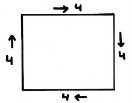
If you are not familiar with breathing techniques, holding your breath can feel a bit challenging at first. The more you practice, the easier it becomes.
For optimal results, it is generally recommended to practice for 5 minutes, three times a day. Or repeat the cycle four times whenever you experience acute stress.
I wish you all a beautiful summer! I’ll be back at the end of August or the beginning of September. Until then!
beautiful and touching